
AI agents are shifting from demo tools to operational infrastructure for teams that need faster decisions and lower manual workload.
In this article
- 01From prompting to process ownership
- 02Why multi-agent architecture usually wins
- 03Practical outcomes we see most often
- 04Awakast perspective: design for traceability first
- 05A rollout sequence that works
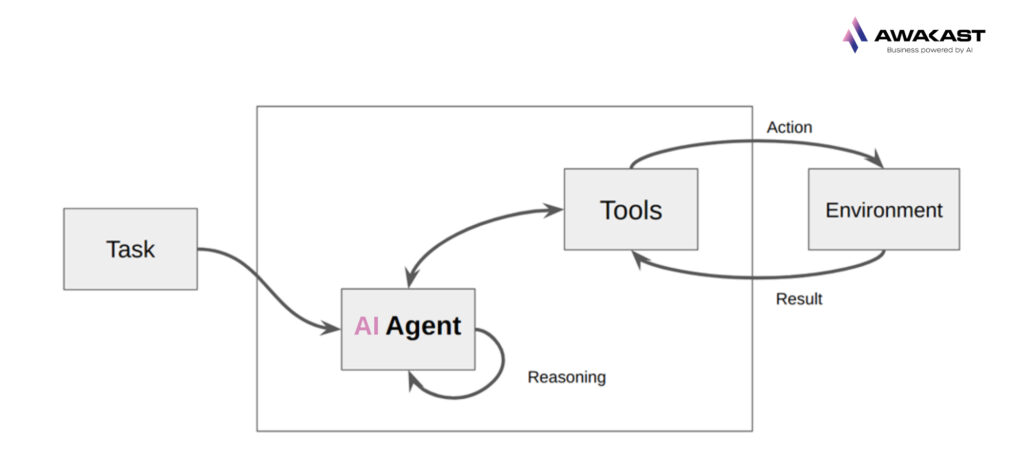
AI agents are often described as the next step after chatbots, but in production they are better understood as workflow workers. A chatbot answers. An agent completes bounded tasks with context, memory, and action.
From prompting to process ownership
The biggest shift is not model capability. It is operating model design.
- Prompt app: summarize a contract.
- Agent workflow: extract clauses, check policy, score risk, route exceptions, log decisions.
That second pattern reduces context switching and drives measurable throughput.
Why multi-agent architecture usually wins
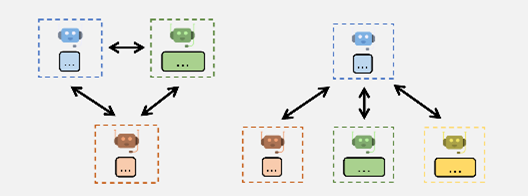
Single agents become overloaded quickly. They attempt extraction, reasoning, validation, and formatting in one loop. Error sources become hard to isolate.
In a multi-agent setup, each role is explicit:
- intake agent normalizes data,
- specialist agent performs domain analysis,
- validator agent checks confidence and policy fit,
- delivery agent hands off to human workflow.
This mirrors good software design: modular, testable, and easier to evolve.
Practical outcomes we see most often
In high-friction operations, even moderate automation brings clear gains:
- legal document triage faster and more consistent,
- candidate and support workflows with lower manual load,
- reduced rework from missing context and inconsistent criteria.
The key is not "maximum autonomy". The key is controlled automation with accountable escalation.
Awakast perspective: design for traceability first
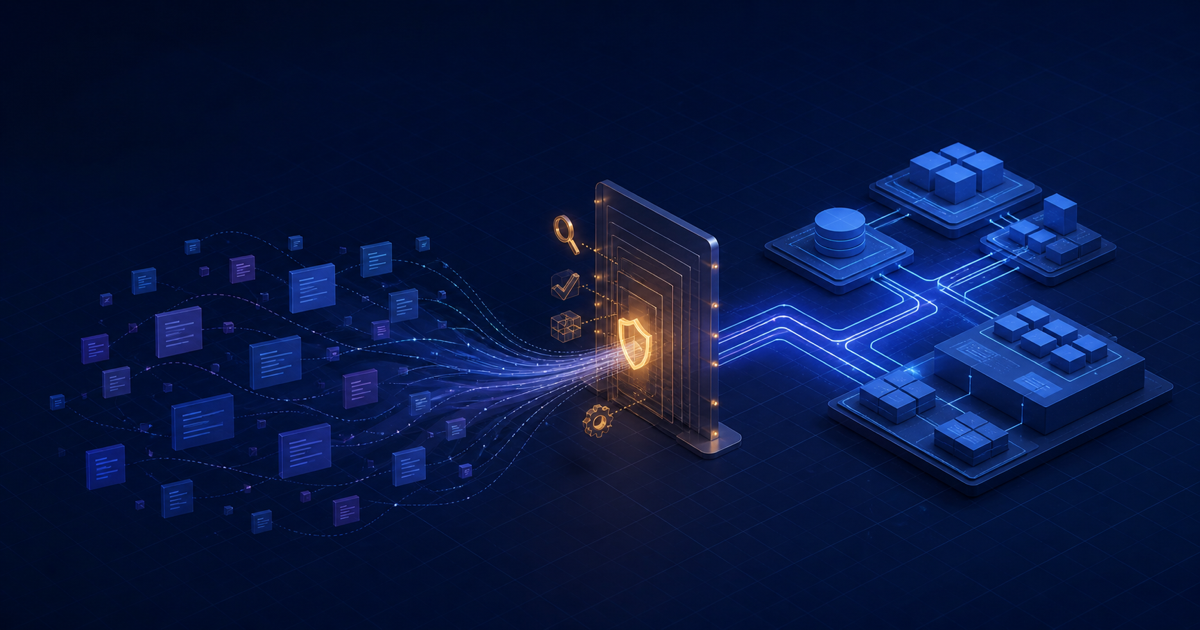
For regulated products, output quality is not enough. You need explainable decision paths and audit-ready evidence.
We recommend each agent output includes:
- source references,
- confidence level,
- rule or policy link,
- clear handoff state.
That is what enables safe adoption by real teams.
A rollout sequence that works
- Select one painful workflow.
- Define baseline metrics.
- Launch a narrow pilot parallel to current process.
- Add human-in-the-loop checks.
- Expand scope only after stable gains.
AI agents are most valuable when they become boring infrastructure: reliable, measurable, and embedded in daily operations.